15-20 October 2025, Maha Sarakham Province, Thailand
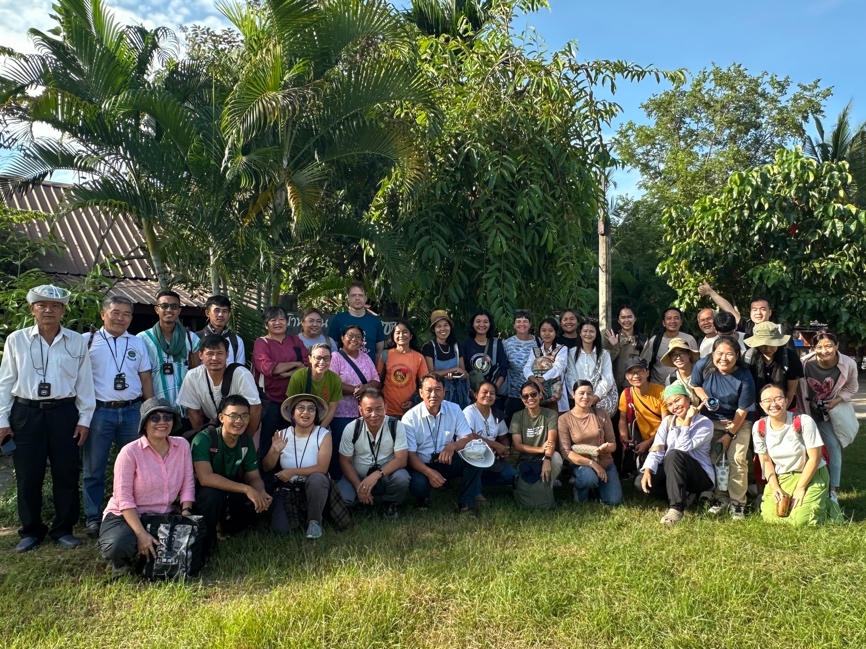
A regional networking activity for Mekong young farmers’ seed exchange was organized in Maha Sarakham, Thailand, from 15 to 20 October 2025. This gathering activity brought together 27 young farmers from six countries—eight from Thailand, four from Vietnam, six from Myanmar, four from Laos, and five from China (Cambodia was unable to join). The exchange offered introductory training on seed management and agroecological seed practices across three dimensions: Head – critical thinking and analysis of seeds within the food system; Heart – awareness of farmers’ rights and network building; and Hands – practical skills such as OP seed production, seed banking, and local knowledge. Participants also initiated small seed-related projects, including seed storytelling films (China), a seed showcase at PunPun’s event at Chiang Mai (Thailand), strengthening farmer seed networks (Myanmar), and building farmer capacity in Luangnamtha province (Laos). In addition, the exchange strengthened relationships with Chinese partners through closer collaboration with a local consultancy. This updated understanding of China’s context and the momentum it has built for the upcoming Sino–Thai Eco-Agriculture Exchange between Thai and Chinese farmers.
Shared challenges across countries suggest that while the pressures on farmers are real and severe, there is also a strong base of experience, creativity, and commitment to build on as the Mekong seed and agroecology network grows.
COUNTRY
MAIN CHALLENGES HIGHLIGHTED
KEY OPPORTUNITIES / STRENGTHS MENTIONED
THAILAND
Loss of control over land and inputs; farmer debt; government registration and certification barriers; shift toward fast food
Strong farmer networks, green markets, seed-saving initiatives, alternative learning centres, social enterprises
VIETNAM
Dominance of formal seed system; supermarket standards; legal restrictions on farmer seed sales; regional differences (north–south)
Seed clubs and community breeding; rich agrobiodiversity; active farmer–consumer links; policies supporting local markets
CHINA
Post-WTO chemical dependence; big platforms squeezing small farmers; generational shift towards processed foods
Growing agroecology movement, especially from youth, farmers’ markets, PGS; strong health-conscious consumer base
LAOS
High chemical use; weak production systems; dependence on imports; limited transport for distribution
Organic markets; cooperatives; traditional seed saving; emerging online sales; community value-adding initiatives
MYANMAR
Civil war; high transport and input costs; market blockages; land grabbing; forced conscription; aging farmers
Local markets in some areas, food forests, seed saving, community solidarity, and mutual support
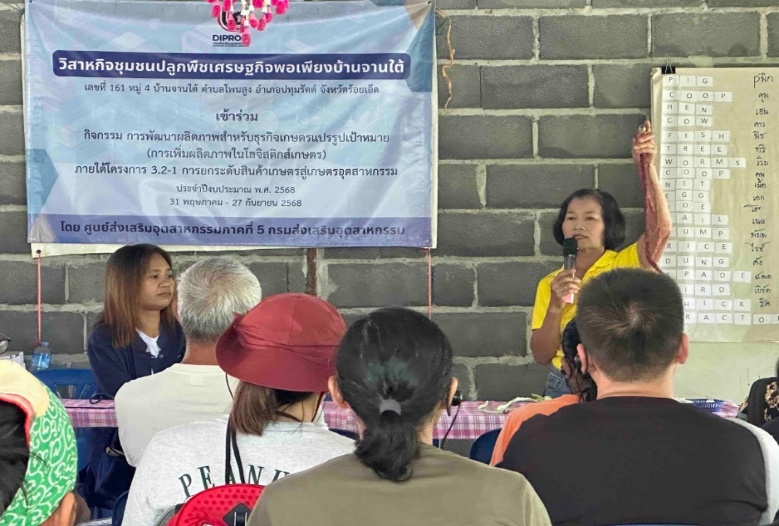
The leader of the Community Enterprise proudly holds up one of the snake bean varieties she developed and patented – now named after her.
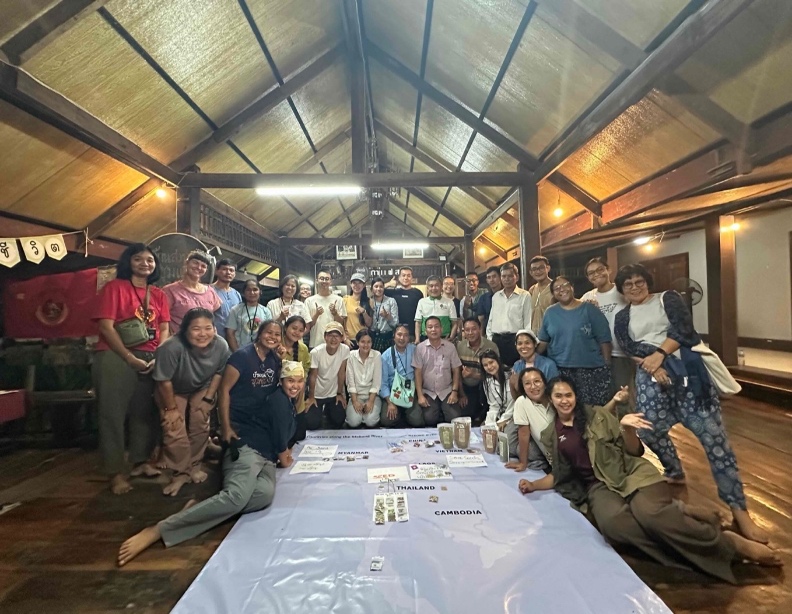
Each country placed one of their most valued seeds onto the Mekong map, adding messages such as “Seed is life” and “Small seed, big power.”
Exchanging Seeds and Stories
During the seed exchange, each country set up a small stall where farmers displayed their seeds and shared the stories, traditions, and challenges behind them. The space came alive with conversations about local varieties, seed-saving techniques, and the cultural meaning carried in each seed. From Myanmar’s community seed banks and Vietnam’s climate-resilient rice varieties to young farmers in China reviving old grains, each table reflected a mix of pride, creativity, and resilience. It quickly became one of the most heartfelt moments of the gathering: tables filled with seeds, memories, and hopes for the future. Participants spoke about varieties that are disappearing, lessons passed down from elders, and the shared responsibility of keeping seeds – and their stories – alive. By the end of the day, seeds were exchanged among participants, carried home to be planted and cared for in new soil across the Mekong region.
Field Visit
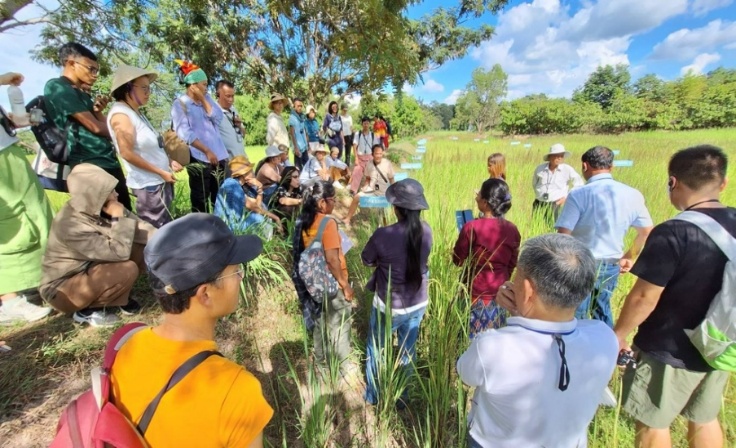
Participants travelled to Roi Et and Mahasarakham to visit two communities quietly transforming their farming systems from the ground up.
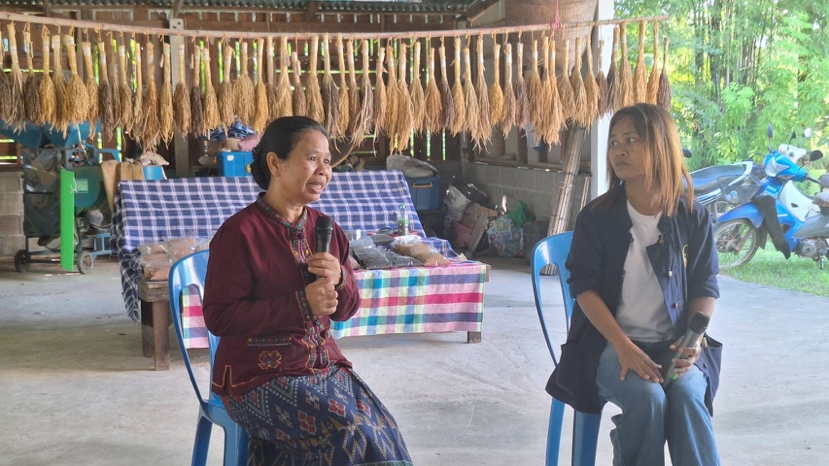
Our first stop was Ban Jan Tai Sufficiency Economy Community Enterprise, where the group’s leader – a confident woman farmer trained at Mae Jo University – welcomed us into a world where seeds are not just inputs, but knowledge, livelihood, and pride. With 40 members, including 12 dedicated seed growers, the group has spent years developing both rice and vegetable varieties through careful observation, selection, and community collaboration.
Their motivation, she shared, was simple: “We are farmers – why should we keep buying seeds from companies?” Today, the group maintains 13 rice varieties, from aromatic local jasmine types to the high-value Hom Siam, which sells at a premium and is now in such demand that the group cannot produce enough to meet it. For them, seed production is not only a cultural and ecological commitment but also a pathway to improved livelihoods: developing and selling good-quality seeds allows farmers to earn more than selling rice grain alone.
The community now trains students, collaborates with government research centres and NGOs, which also supply seeds for testing, and sells seeds directly at local markets, fairs, and online. Demand consistently exceeds supply.
A distinctive feature of this community is its close cooperation with universities and government agencies. They work hand in hand with the provincial rice centre and adhere to official standards for seed purity and quality. Government technicians provide training, and grants have supported equipment such as transplanting machines to reduce labour costs. They register their seeds with local authorities, secure certification for rice seed, and keep open channels with officials to ensure compliance with plant variety protection laws. As the leader noted, “We have been doing this for 18 years with no problems – but we must be careful. Businesses feel farmers compete with them, so always liaise with the government, follow the rules, and try to comply as best we can.”
In the afternoon, we travelled to Nong Koo-Sri Wilai Organic Agriculture Group, where women farmers in bright pink and purple outfits greeted us with dance and local snacks. This community shifted from chemical rice farming to organic methods – an act of courage in an increasingly unpredictable climate. Led entirely by women, the group preserves 30 local rice varieties, selecting six of them to grow for the market and keeping the rest safe for future generations. They do not produce seeds for sale, but save them so members can access the varieties they need. They also turn their rice into processed products – such as grilled sticky rice – to add value, strengthen local incomes, and make full use of their traditional varieties.
With limited water and poor soils, the women emphasised that their goal is not expansion but self-reliance, quality, and fairness. “We are not able to expand. We choose quality over quantity. Enough to eat and enough to live – that is enough.” Consumers know them personally, trust their rice, and value the local knowledge behind it. Organic farming has improved incomes and, importantly, allowed young people to remain in the village: “Now our children see it’s possible to make a living from farming,” one woman shared.
Across both communities, one message stood out: local seeds, local knowledge, and local relationships form the backbone of resilience – especially in a changing climate and unstable markets. The visits offered participants a vivid example of how farmer-led seed work nourishes communities, protects biodiversity, and sustains hope across generations.
“Our seed is important to conserve. We keep our local seeds so anyone who needs them can access them.”
“Organic farming helps our families stay together. Our children see they can survive as farmers.”
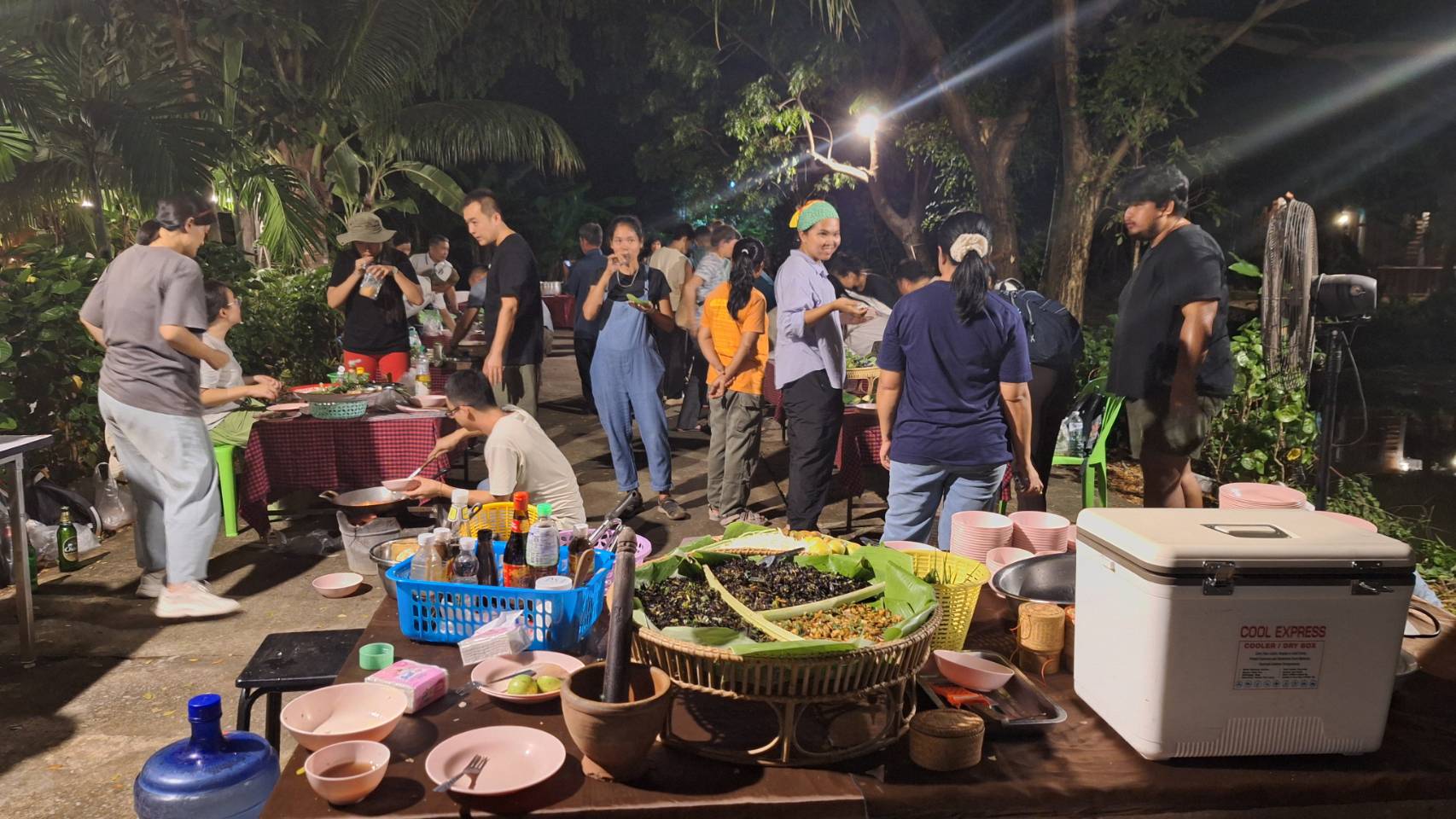
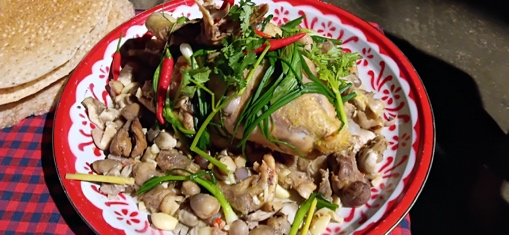
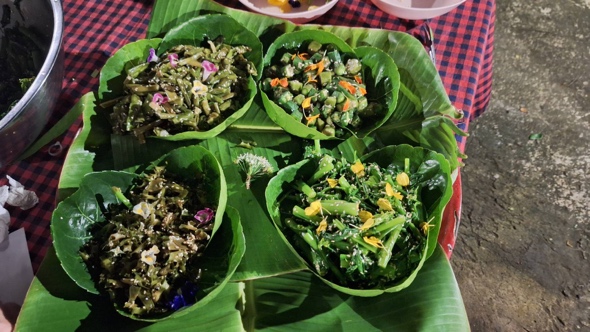
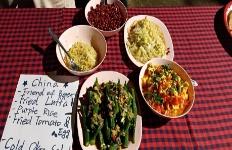
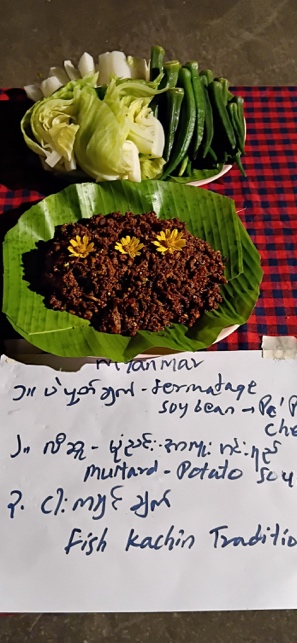
On the way back, the group stopped at a local market to buy fresh ingredients for dinner. Each country team prepared a dish to share — a joyful evening of cooking, laughter, and incredible food that celebrated the flavours and cultures behind the seeds we had spent the day learning about.
Today’s dominant food culture promotes ultra-processed products – convenient, long-lasting, and engineered for taste, yet disconnected from local environments and stripped of real nutrition. This shift erodes health, culinary skills, and local food economies.
Reclaiming home cooking and choosing local ingredients helps rebuild our relationship with food: it restores knowledge of ingredients, supports farmers who steward the land, and preserves the biodiversity and cultural identity woven into traditional dishes.
And at the heart of all of this are seeds – local, diverse, and resilient – because without protecting the seeds that sustain our crops, we cannot sustain the nourishing and culturally rooted food systems we hope to revive.
Country Group Summaries from the regional seed exchange
China: The China group, anchored by the Farmers’ Seed Network, FoodThink, and Beijing Farmers’ Markets, is a well-established ecosystem. Its members are farmers in these networks who focus on consumer engagement, direct markets, and bottom-up conservation. Their small grant proposal to create a consumer-oriented video leverages their strengths in public education, storytelling, and highlighting local seeds. Plans include seed conservation, community mobilisation, legal clarity on seed sales, social media outreach, children’s education, and local seed banks. The mix of NGO and farmer voices, along with strong internal support and collaborations, fosters a cohesive and engaged group.
Laos: The Laos group’s mixed seed system is shaped by traditions, cooperatives, government programs, and the National Agriculture and Forestry Research Institute (NAFRI). Despite some policy support for agroecology and seed saving, implementation is uneven and top-down. Government promotion of high-yield crops limits farmer autonomy, especially in uplands converted to maize and cassava for feed industries. Most sustainable agriculture efforts are through donor projects, with civil society organizations providing training in organic farming and marketing. The group highlights the need for stronger collaboration among farmers, CSOs, government, technical institutions, and media, and for expansion into new provinces. Their exchange emphasized youth engagement, knowledge sharing, and pride in local seed production. Next steps include leveraging ALiSEA’s meetings and youth activities, especially in Luang Prabang, to raise awareness about local seeds, running online campaigns, and organizing field visits to learn from other seed initiatives. They aim to connect community efforts to ALiSEA, deepen youth involvement, and build a national seed-saving movement. Their small-grant proposal focuses on capacity building and technical support for organic farmers within existing donor projects.
Myanmar: The group operates in localized areas under strict political constraints, from Mandalay and Southern Shan State to Myitkyina in Kachin, with some members displaced to Thailand. Because mapping networks was unfeasible, they envisioned a future seed-saving network connecting farmers, youth, church groups, CSOs, researchers, and communities across states. Their strategy focuses on achievable steps: strengthening local resilience, raising awareness and skills in seed selection and conservation, improving farmer organizations and women’s leadership, learning simple processing techniques, identifying model farmers, and gradually expanding until nationwide reconnection is possible. Their small grant builds on local structures through activities with women’s groups in Myitkyina/Moekaung and with seminary students and church farmers in Mandalay Division. The overall vision emphasizes immediate opportunities, grassroots development, and gradual national reconnection when conditions improve.
Thailand: Thailand’s largest group, many of whom are linked to the Alternative Agriculture Network (AAN), leverages Thailand’s history of farmer organization, alternative agriculture, and civic activism to map diverse actors and strategies—from community seed saving to market and policy work. Their strengths include extensive experience in seed preservation, vibrant learning spaces, broad regional networks, support for diversity in emerging markets, and active social media marketing. They aim to engage more with businesses, consumers, local leaders, religious groups, and politicians to strengthen local economies and farmers’ legitimacy. Their strategy combines grassroots work with political action: strengthening networks, creating learning tools, raising awareness, advocating for farmers’ rights, and developing markets, seed production, processing, and responsible consumption. Their participation in the “Khao Mai Pla Mun” Festival at Pun Pun Organic Farm supports these goals by expanding networks, raising awareness, and improving market access for local seeds and produce. Overall, the group combines grassroots and political activism, with members acting within their capacities.
Vietnam: The Vietnamese group mainly consisted of participants from the Mekong Delta—two organic rice farmers and one academic from Can Tho University (CTU)—plus a woman from Da Nang. Due to translation issues and limited introductions, it was difficult to fully grasp their backgrounds, connections, or their relationship to Vietnam’s seed and agroecology scene. Most insights focused on the Delta, where rice commercialization has led to a formalized and privatized seed system. Farmers are part of a state-led seed supply structure, and private seed companies exert significant influence. The group mentioned seed clubs—farmer organizations born from participatory plant breeding with CTU—, but it’s unclear whether these clubs are still active or if their members are involved. Despite these challenges, their final presentation was strategic, emphasizing a more inclusive, farmer-led seed sector by strengthening participation, working with institutions, market approaches, gender, and youth. They highlighted how Vietnam’s seed sector is heavily driven by the state and market forces, limiting farmers’ ability to breed, conserve, or sell seed. Their strategy emphasizes grassroots empowerment, collaboration with science and government, and building recognition for local varieties. Their small grant proposal—a Community Seed Fair and Exchange in the Mekong Delta—supports farmer training, seed fairs, awareness, and seed-saving networks. However, it doesn’t address two key structural issues: the restrictive legal environment, including UPOV 1991, and the risk that farmer seed initiatives will be co-opted by state or private actors. While the grant promotes community action, deeper engagement with policy is needed to ensure seed networks stay farmer-led.


 Towards Organic Asia