March – June 2025, Thailand
Knowledge Management and data mapping for seedsuseda qualitative methodology. Purposive sampling was used to identify key actors involved in seed issues within TOA’s network of the Alternative Agriculture Network (AAN) across Thailand’s regions. This study aimed to update the current situation, synthesize knowledge on seed issues, and develop strategic plans within the Thai network. Data were collected through multiple methods, including in-depth interviews, focus group discussions, and participatory observation. The four field trips encompassed 24 site visits. This comprised 1 visit to the Sanamchai Khet Organic Farm, 10 visits during the northern trip, 7 visits in the northeastern trip, and 6 visits for the southern trip. In total, there were 35 participants involved in the field trips, including 7 TOA team members (project consultants, TOA staff, a fellow advisor, and a fellow from the CSDS program at Chulalongkorn University), 24 interviewees (17 farmers, 2 academics, and 5 representatives from local NGOs), and 4 local coordinators. The conclusions were based on key findings from each region, as follows.
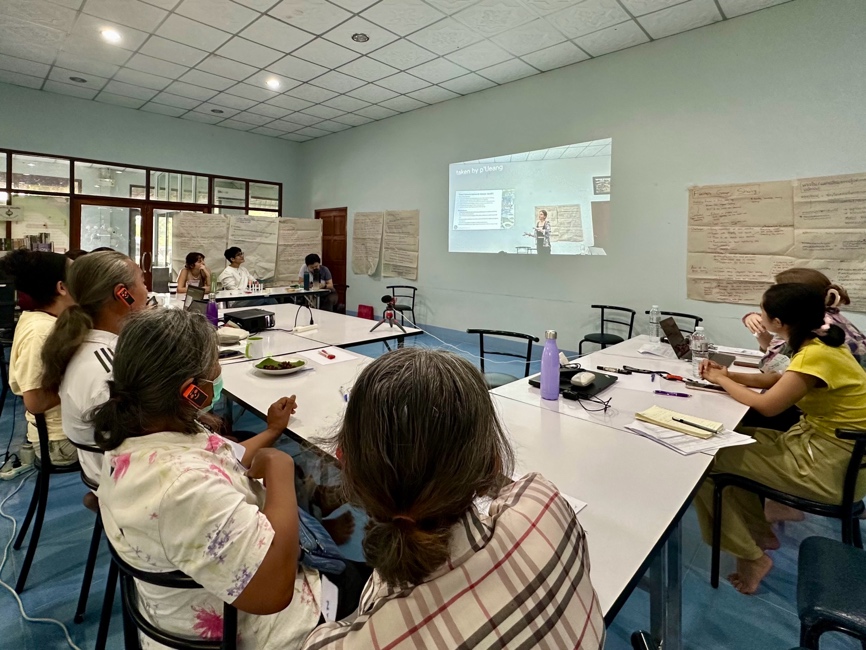
1) The trip to Sanamchai Khet Organic Community with the MAIDS-GRID Program at Chulalongkorn University was held from 27 to 28 March 2025. The project focused on Farmers in the Sanamchai Khet Organic group in central Thailand as key informants under AAN. Sanam Chai Khet’s organic community has transformed degraded land into a thriving agricultural hub, creating a resilient food system benefiting local farmers and urban consumers through sustainable practices, seasonal eating, and seed independence. Their work shows that organic farming isn’t just about growing food—it also preserves a way of life and promotes seed conservation, self-sufficiency, and seed commerce. Farmers help biodiversity, food security, and sustainability by maintaining and exchanging seeds.
Field Visit to the Sanamchai Khet Organic Farm: The farm visit revealed that farmers have employed a 20-day seed-improvement cycle to enhance traits such as length, color, and seed countthrough consistent record-keeping. Seed production has notable economic value, with prices reaching 1,200 Baht/kg and annual incomes estimated at 100,000 Baht, supported by community-based branding and some individual exports. Notably, women have transitioned from supportive roles to leadership positions in the seed system, and the community has achieved EU-certified organic status, enhancing both the credibility and marketability of their products.
Seed Exchange Workshop: The Sanam Chai Khet group promotes food security and the preservation of local seed varieties through monthly collection and sharing of open-pollinated (OP) seeds, strongly emphasizing women’s roles and plans to become an organic seed enterprise. Key challenges include legal restrictions (e.g., UPOV 1991), private sector monopolies, market instability, climate change, and limited youth engagement. The group addresses these through community seed banks, seed funds, farmer-breeder training, and local seed databases while drawing lessons from international practices in Kenya, Vietnam, and China. Efforts to engage young people focus on skill-building, climate education, appropriate technology, and linking organic farming with the creative economy. The group aims to establish a seed enterprise that enhances food, economic, and social resilience through national and regional collaboration.
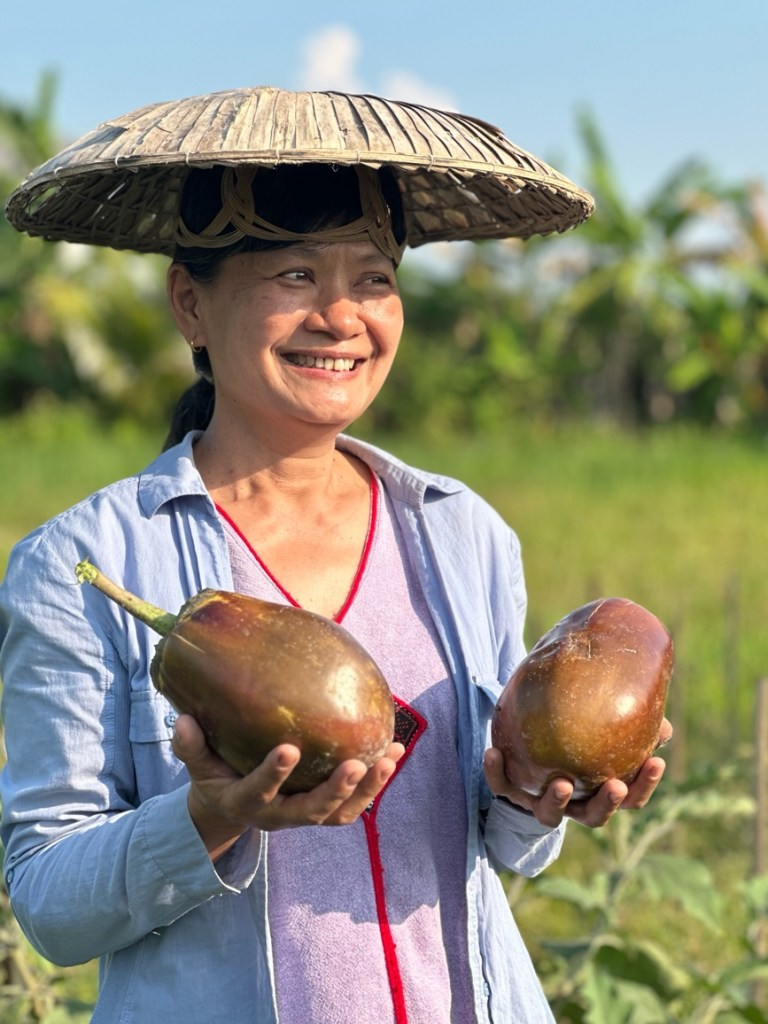
2) The trip to the northern provinces—Chiang Mai, Chiang Rai, Nan, and Lampang—occurred from April 21 to 26, 2025. Northern AAN intentionally selected these provinces because they are key areas where stakeholders involved in seed management work to sustain local food systems, preserve biodiversity, and enhance food self-reliance.
The project explored five sites in Chiang Mai Province, revealing various seed practices. Pun Pan Organic Farm (Jon Jandai) focuses on seed sharing and community access, considering seed sales as a long-term objective. Echo Asia Foundation employs a more structured method, managing seed data, networks, and exchanges. HomSali and Mattana Gardens develop seed prototypes with some organizational support, but legal hurdles hinder their growth into formal businesses. Don Jiang Village can sell yellow bean seeds as a community enterprise, but faces challenges in engaging youth in organic farming.In Chiang Rai Province, Mr. Supot Lija from the Ethnic Community Health Promotion Association was visited because his group emphasizes the profound cultural importance of seeds within ethnic communities. Seeds represent life, unity, and resilience, supporting food security and preserving traditional knowledge through free exchange and communal sharing. Interestingly, key actors in Nan Province, including the Hug Muang Nan Foundation, Joko Learning Center, and Nan Community College, have established a robust collaborative seed network. They stress that farmers should be knowledge-holders and creators, exemplified by the successful registration of the Nan-59 rice variety. This case illustrates the shift in power from formal systems to farmer-led innovation. In addition, farmers in the Hug Nam Jang groupin Lampang Province are visited to show prioritizing their high-quality seed selection and sharing seed within their community. Although some attempt to sell seeds, they face regulatory and technical hurdles. Still, they view seeds as the core of organic farming and prioritize sharing over profit.
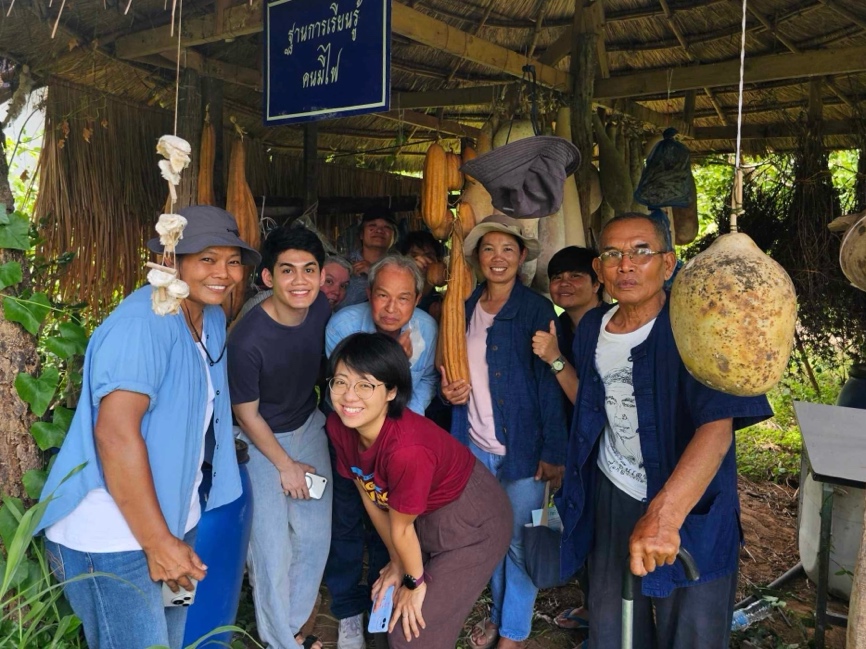
3) From May 13 to 16, 2025, a trip took place in the northeastern region, covering Maha Sarakham, Kon Kean, Roi-et, and Kalasin provinces. The local coordinator of the northeastern AAN chose these specific provinces because local initiatives and the growth of seed enterprises drive their advanced seed management efforts. This is especially true in developing regional community seed enterprise networks and engaging young people to expand organic farming through business and marketing, particularly by utilizing family resources.
In Khon Kaen Province, Jongkol Para, inspired by sustainable agriculture training, has created a diverse urban seed garden and advocates for using local seeds despite facing legal challenges and community doubts. Her experience highlights the importance of improving post-harvest techniques, storytelling about seed value, and committing to long-term efforts. Seven seed enterprises operate in the area, aiming to establish seed banks and promote local varieties.
In Maha Sarakham Province, organic farming is deeply rooted in the local culture and driven by the “Green Market.” Each community has its unique approach: Nong Khu–Sriwilai conserves rice varieties, Nong Jod shifts from monoculture to diverse cropping, and Nong Phue focuses on chemical-free vegetables and partial organic rice farming.
In Roi-et Province, Arya Farm Organic Rice shows how young farmers can sustain organic agriculture through family succession, supported by business skills. However, not all farmers expect their children to continue farming, and new farmers need access to networks and mentorship.
In Kalasin Province, the Sai Na Wang Seed Center maintains hundreds of traditional varieties, including the GI-certified RD6 sticky rice. Though not a formal enterprise, it reflects Phu Thai cultural values of food self-reliance and household food sovereignty. The group plans to expand youth exchange programs focused on organic farming and seed systems. Interestingly, the northeastern AAN proposed two main conservation approaches: (1) maintaining seed ownership and varieties, and (2) using and exchanging seeds to enhance diversity. Collaboration with academic institutions is key for registering and scientifically validating new varieties, with support from universities such as Maejo and Mahasarakham. The movement advocates legal recognition of community-developed seeds, capacity-building efforts, and alternative certification programs such as MASIPAG in the Philippines to strengthen local seed sovereignty and oppose centralized seed control.
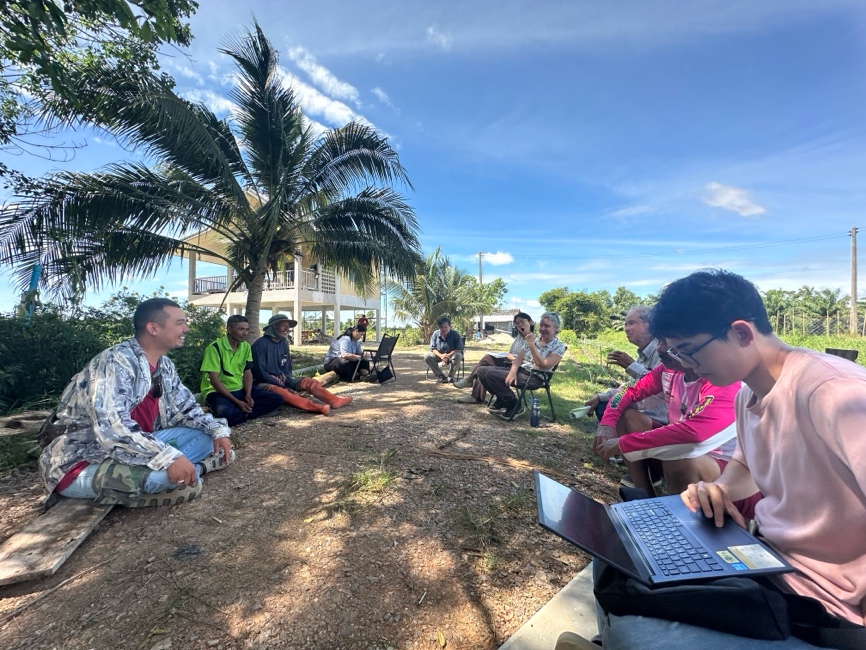
4) The trip to the southern provinces—Nakhon Sri Thammarat, Phatthalung, and Songkhla—took place from June 16 to 19, 2025. The local coordinator of AAN in the South chose these specific provinces because they are connected to genetic conservation efforts in southern Thailand, which mostly involve restoring rubber-integrated forests and conserving perennial trees, forest trees, fruit trees, root crops, and various shrub-type plants.
Two main issues emerged from the Southern Thailand Trip: 1) agricultural systems and genetic resource management, and 2) the new generation and emerging farmers.
In Phatthalung Province, the “Witchalai Ruang Khao” serves as a rice wisdom school focused on conserving local rice varieties, with a small group of farmers practicing integrated farming supported by the New Theory Agriculture model. However, expansion seems limited. Meanwhile, Pan Saeng Garden and Phu Din Garden have dense genetic material collections. Some young returnees are developing alternative farming models, such as the “Ya Sai Ya Jai Fund”
In Nakhon Sri Thammarat Province, which coordinates conservation and dissemination of diverse genetic resources, organizes activities like the third-year “Dahla Festival,” and promotes genetic heritage. Rubber-forest integration systems at all visited sites have taken over a decade to yield tangible results.
In Songkhla Province, Nattharukkhaved (Nattha Forest Healing Center) promotes forest conservation, restoration, and agroforestry with rubber trees, collaborating with communities and schools through initiatives like “One Rai One School.” The Khao Kuha Rice Field Classroom in Rattaphum District, led by Natthawan Isaratha, opposes rock mining by building networks and establishing the Southern Khao Kuha Rights Protection Association. They use grassroots funding to support sustainable agriculture and native seed conservation, particularly local rice varieties such as red Leb Nok and heritage vegetables, through seed exchanges and education. For the next generation and emerging farmers, the “Kon Kla Khuen Thin” network is a key connector, supporting young farmers in the South through mutual learning and encouragement. Events like those organized by the Kon Kla network and the Ya Sai Ya Jai Fund, including the “Dahla Festival,” foster interaction and education. Some younger farmers, descendants of farming families, still lack access to broader knowledge networks and seek more learning opportunities and market access.


 Towards Organic Asia