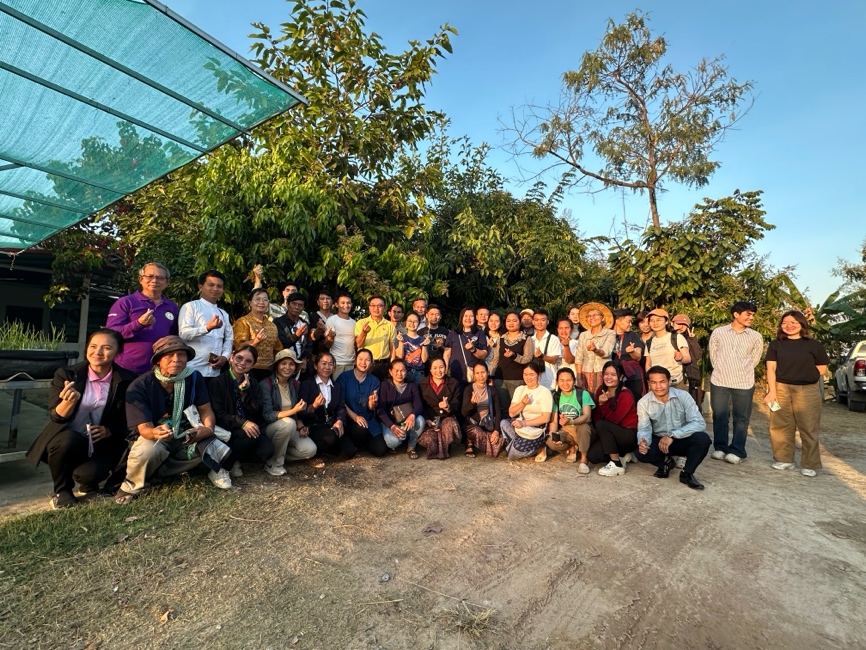
23-25 January 2025, Thailand
25th Seed Festival 2025 “Young Seed for the Future” at Yasothon Province from 23 to 24 January 2025 Participants from the regional network, in collaboration with Project SEVANA and TOA, included 25 regional farmer representatives from Cambodia, Myanmar, Laos, and Vietnam, as well as 6 members of the Just Mekong Fellowship, part of the MAIDS-GRID Program at Chulalongkorn University. Additionally, the group comprised 1 TOA Consultant and 2 TOA team members.
The Seed Festival was a collaborative effort between the Alternative Agriculture Network and the Sustainable Agriculture Foundation (Thailand), aimed at strengthening local food systems and promoting biodiversity conservation. By bringing together farmers, researchers, and policymakers, the festival promoted the exchange of knowledge and best practices for preserving local plant varieties. Through activities such as workshops and exhibitions, the event aimed to empower communities to take action on climate change and ensure food security for future generations.
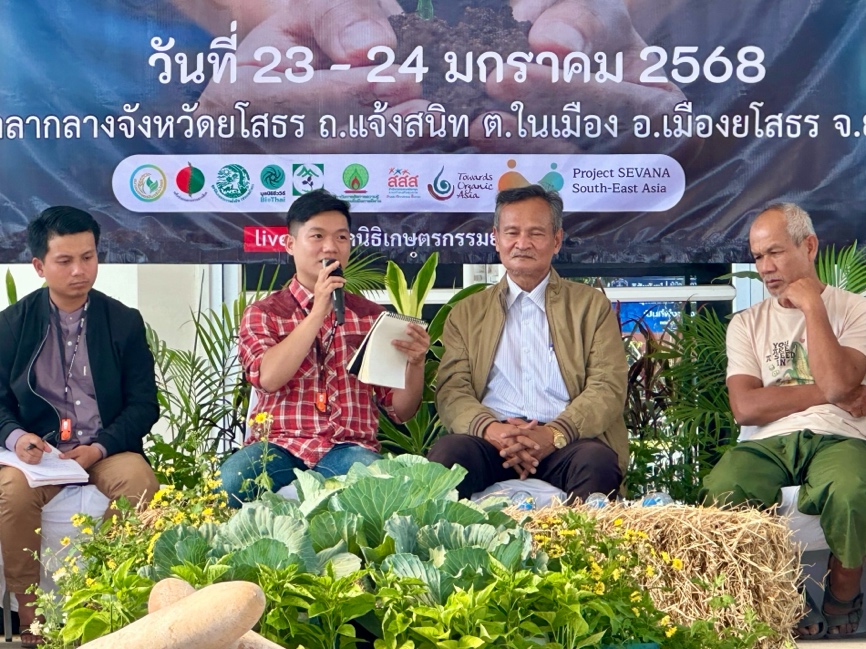
On 23 January 2025, the Mekong Seed Network hosted a panel discussion on Community-Based Genetic Resource Management and Policies Impacting Seeds in Southeast Asia.
The panel addressed the crucial issue of community-based seed conservation, emphasizing the challenges posed by climate change, biodiversity loss, and the need to protect local plant varieties. It provided a valuable opportunity for participants to share experiences, knowledge, and best practices in seed conservation, thereby enhancing the region’s capacity to preserve and utilize local genetic resources by fostering collaboration among farmers, researchers, policymakers, and civil society organizations. Key speakers and their contributions included:
Jon Jandai, from the Pun Pan Center for Self-Reliance and Seed Center, emphasized the urgent need for seed conservation to ensure food security. He highlighted the threats posed by corporate control over seed markets, biodiversity loss, and the importance of community-led initiatives in addressing these challenges.
Pranee Makkanan, from the Khon Thaam Association, underscored the significance of seed saving amid environmental uncertainties. She emphasized its alignment with the association’s goals, which focus on strengthening communities.
Kingkorn Narintarakul Na Ayutthaya explained how Thailand’s Plant Variety Protection Act, based on the UPOV 1978 convention, has limited farmers’ access to and control over traditional seed varieties. She emphasized the importance of community-based efforts in conserving and developing local plant varieties.
Ubon Yoowah provided an overview of seed conservation efforts in Thailand, comparing the country’s policies with those of neighboring countries. He emphasized the impact of intellectual property laws, such as the UPOV 1978 Convention, on farmers’ rights and the importance of community-based seed banks in ensuring food security.
Representatives of farmer groups in Laos expressed concerns about restrictions on farmers’ access to and use of indigenous seed varieties in the region. They emphasized the importance of seed sharing and exchange within communities to maintain genetic diversity and food security. Additionally, learning from neighboring countries in the Mekong region will strengthen the network of seed conservationists, enabling farmers to become more self-sufficient and preserve their cultural heritage.
Representatives from farmer groups in Myanmar shared their experiences conserving indigenous seed varieties within their communities, which they have undertaken since 2014. Despite challenges such as conflict and climate change, these communities remain committed to preserving these seeds for food security and cultural heritage. They highlighted the importance of learning from networks such as those in Thailand to improve their seed management systems and to expand their efforts to other regional communities.
Representatives from farmer groups in Cambodia emphasized the importance of conserving local seed varieties, particularly amid climate change and excessive agrochemical use. Promoting diverse cropping systems and raising consumer awareness are crucial to restoring biodiversity and ensuring food security. The representative shared personal experiences of farmers in Cambodia who have turned to multinational seed companies, leading to soil degradation and biodiversity loss.
Representatives of farmer groups in Vietnam discussed their experiences conserving indigenous rice varieties. They highlighted the challenges of declining biodiversity and overreliance on external agricultural inputs. To address these issues, they initiated a project to collect and conserve a wide variety of local rice varieties. Additionally, they promoted the use of organic fertilizers and biopesticides to reduce chemical use. The representative emphasized the importance of passing knowledge and traditional practices to younger generations to preserve cultural identity and food security.
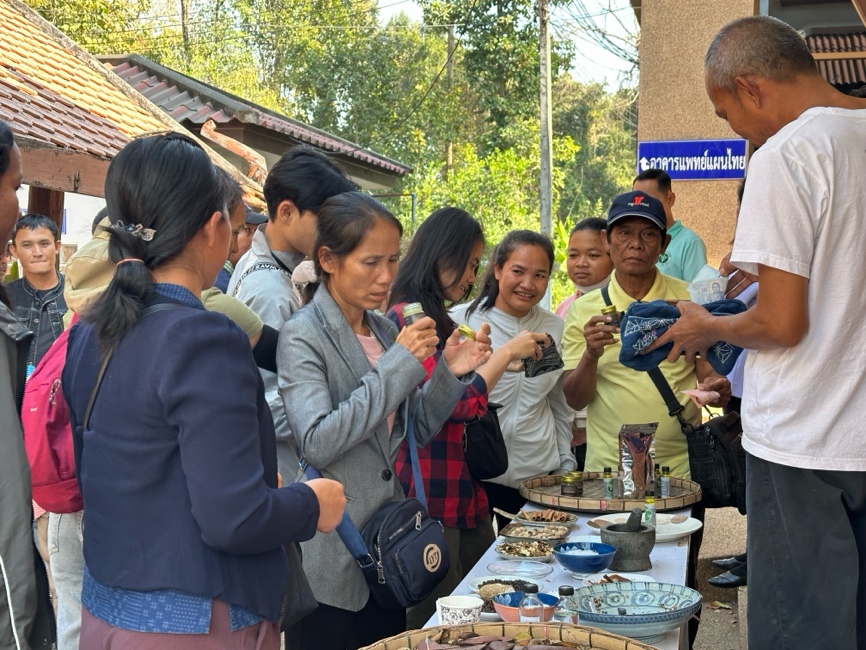
On January 25, 2025, participants gained firsthand experience with the community’s initiatives to restore local rice varietiesthrough visits to the Local Rice Conservation and Development Group and Kutchum Hospital in Kutchum District, Yasothon Province. The community faces challenges, including low prices, inadequate milling techniques, shifting consumer preferences, and insufficient government support. To address these issues, farmers have come together to research, develop, and disseminate knowledge to preserve local rice varieties, which are essential for food security and the transmission of ancestral wisdom. They began by pinpointing local problems and have sought solutions through detailed observation and experimentation. Beyond rice conservation, there is a significant emphasis on developing medicinal plants, sharing expertise on herbal farming and processing, and collaborating with Kutchum Hospital. This illustrates how communities can effectively combine knowledge and resources to foster sustainable change. The achievements of the villagers in Kutchum District exemplify the strength of community-driven efforts in promoting sustainable practices and inspiring future generations to cherish natural resources and local heritage.
Summary of Key Takeaways from Participants in the Seed Festival
| Country | Takeaways |
| Laos | Emphasis on the importance of engaging younger generations in seed conservation, understanding the legal implications of seed saving, and the need for knowledge exchange and collaboration within the region. |
| Vietnam | Inspired by the resilience of traditional seeds and the power of community-based conservation, participants expressed a desire to replicate these efforts in Vietnam, with a focus on youth engagement and knowledge sharing. |
| Myanmar | Committed to preserving traditional seeds and establishing community seed banks. Participants highlighted the challenges posed by conflicts and climate change but expressed optimism about the future of seed conservation. |
| Cambodia | Emphasized the importance of seed conservation for food security and biodiversity. Participants expressed concerns about the overuse of agrochemicals and the loss of traditional knowledge. They are committed to promoting agro-ecological practices and engaging youth in seed conservation. |
| China | Highlighted the power of community networks in seed conservation. Participants discussed the importance of knowledge sharing, seed exchange, and the development of a strong community of seed savers. They also emphasized the link between seed conservation and sustainable food systems. |


 Towards Organic Asia