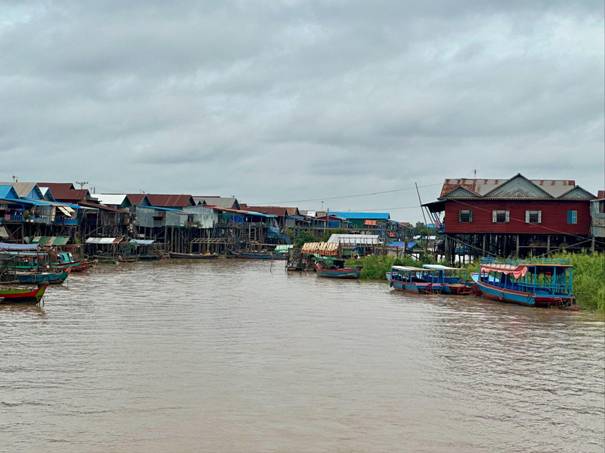
11-15 September, 2024, Cambodia
The Study Tour at Tonle Sap, the Pre-MAEW Event, was organized by Project SEVANA South-East Asia in collaboration with the Fishery Action Coalition Team (FACT), a coalition of NGOs established in 2000 by a group of NGO members working on fisheries and environmental issues around the Tonle Sap Lake. FACT aims to build a strong coalition of NGOs and local grassroots organizations to protect fisheries, water resources, and other natural resources in Tonle Sap Lake, the Mekong River, and Cambodian marine regions along the coastal provinces.The activity was organized in the aspect of the learning field visit to exchange the lessons learned on their adaptation to climate change and discuss the impact of hydropower dams in the upper Mekong River on their ecosystem and livelihood around Tonle Sap Lake.
Field Visit at Kampong Phluk Floating Village The Overview of Situations around Tonle Sap Lake: The Tonle Sap Lake experiences wet and dry seasons, each lasting 6 months. There are 37 land plots in the Tonle Sap Lake. The concession’s ownership of these land plots affects the way of life and community around the lake. Changes in the lake’s water system significantly impact the villagers’ livelihood. While water from the Mekong River and local rivers replenishes the lake, refilling into the lake is slower than before and dries up rapidly. This shrinking of the Tonle Sap Lake has led to a loss of biodiversity and fish species, as fish cannot reach their spawning grounds, and abnormal tides are hindering the growth of fish roe. As a result, the artisanal fishery in the Kampong Phluk Floating Village has declined. From 1993 to 2000, families could catch 20-30 kilograms of fish per day, but now they can only get 7-8 kilograms.
Working groups in the Kampong Phluk Floating Village:
- Kampong Phluk Community-Based Eco-Tourism (KPCBET): The main goals are to generate income for villagers and preserve the environment.
- Kampong Phluk Community-Based Tour Service and Transportation
- Kampong Phluk Community-Based Small-Scaled Fishery: The primary objective is to establish a sustainable fish conservation area to safeguard endangered local fish species and their spawning points. Any fishing activity within the conservation area will result in fines, confiscation of fishing equipment, or notification of the violation to the Provincial Fisheries Office.
The farming practices as an adaptation for sustaining the household: The fishery is not enough to maintain their life; one adaptation is that villagers need to learn farming practices in small plots to feed their families. FACT organization supports seeds and technical skills for planting following their livelihood in small and limited space and resources.
Point of view on the future of the community: The primary objective is to restore and regenerate the fish species and expand the fish conservation area to 2-3 kilometers from the current one. This is important because a greater number of fish in the lake significantly contributes to the villagers’ food security, particularly those with low incomes.
The community needs to collaborate with another community in the same neighborhood to maintain the fish conservation area and expand the fish species, aiming to register the preserved fish area with the Ministry of Agriculture, Cambodia.
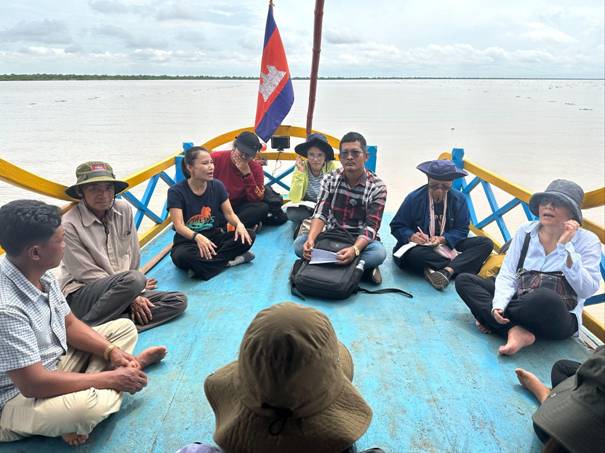
Field Trip to Siem Reap: Organic Markets and Farms
Purpose of the Field Trip The field trip to Siem Reap, Cambodia, aimed to provide participants with a firsthand look at organic farming practices and the operation of organic markets in the region. The primary goal was to learn from successful initiatives and apply these lessons to promote sustainable agriculture.
Key Findings and Observations:
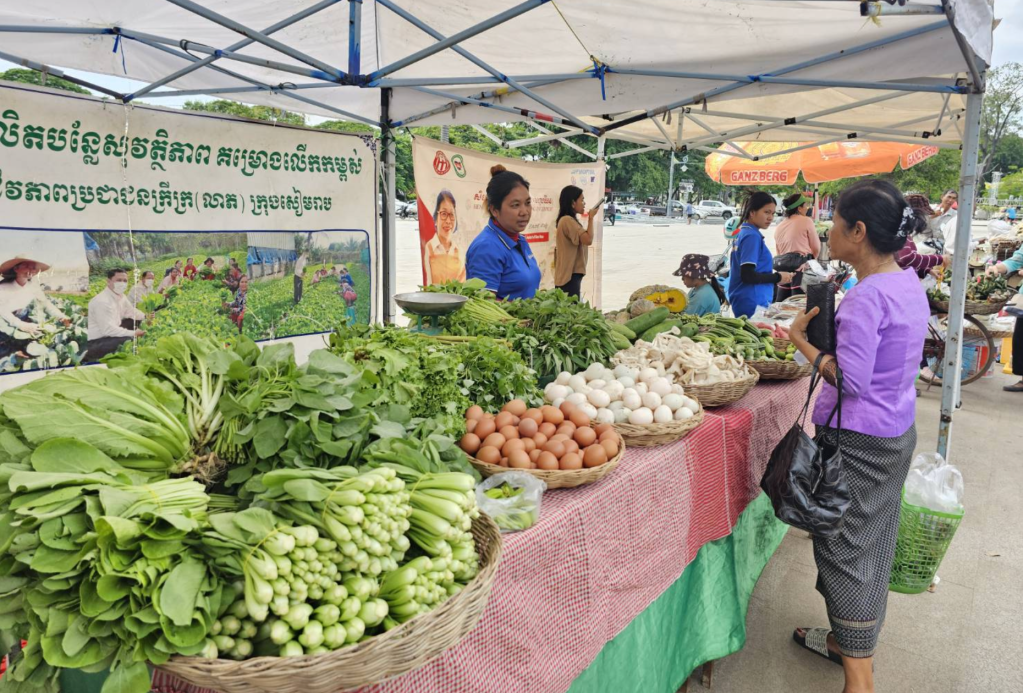
- Organic Markets:
- The Siem Reap Farmers’ Market was established in 2019 and has grown significantly, with over 25 vendors selling various organic produce.
- The market is supported by the government providing quality control, training, and marketing
- Products sold include organic vegetables, fruits, poultry, and fish.
- The market serves as a platform for farmers to sell their produce directly to consumers, ensuring fair prices and supporting local economies.
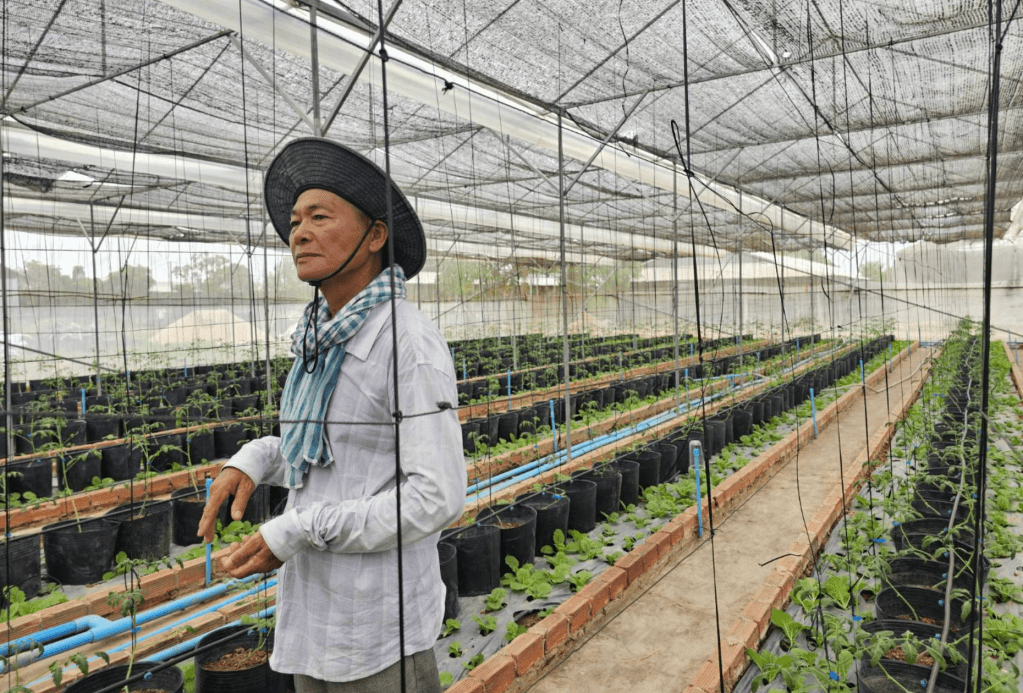
- Organic Farming Practices:
- Farmers in Siem Reap have adopted a range of sustainable agricultural practices, including crop rotation, composting, and natural pest control methods.
- Farmers have diversified their income by integrating livestock farming with crop production.
- Challenges faced by farmers are limited market access to quality seeds and labor shortages.
Overall, the study tour provided valuable insights into the potential of organic agriculture to contribute to sustainable development by learning from the experiences of farmers in Siem Reap, participants can develop strategies to promote similar initiatives in their communities


 Towards Organic Asia