
16-25 November 2023
TOA, in collaboration with the ICE network and Bhutan Soul Farmers, organized a Climate Resilient Training of Trainers (TOT) on “Climate Justice from Collective Consciousness” from November 16th to 25th, 2023, at Wongsanit Ashram Community in Thailand. The TOT aimed to enhance facilitation skills and knowledge related to climate change and environmental issues within a climate and ecological justice framework. Participants from 10 countries engaged in various modules, including Orientation, Root of Inequality, Untwisting Globalization, Honouring Indigenous and Women’s Voice, Exploring Sovereignty through Interfaith Dialogue, Collective Envisioning through Advocacy Planning, Field Visits, and Facilitation Skills.
During the program, TOA led two field visits for the group to gain insights into farming models and livelihoods that contribute to community sustainability:


1. The Mab Aung Center: This center operates based on the sufficiency economy philosophy, promoting moderation, reasonableness, and self-sufficiency alongside diligence and knowledge acquisition. The center showcases practical applications of this philosophy by producing its food, fertilizer, and medicine while sharing knowledge with the public. Notably, the center is renowned for its “Kok Nong Na Model” of land and water management, highlighting local innovation. Additionally, participants visited a nearby Buddhist temple where monks, students, and laypeople live as an intentional community bound by shared values of harmony and interdependence.
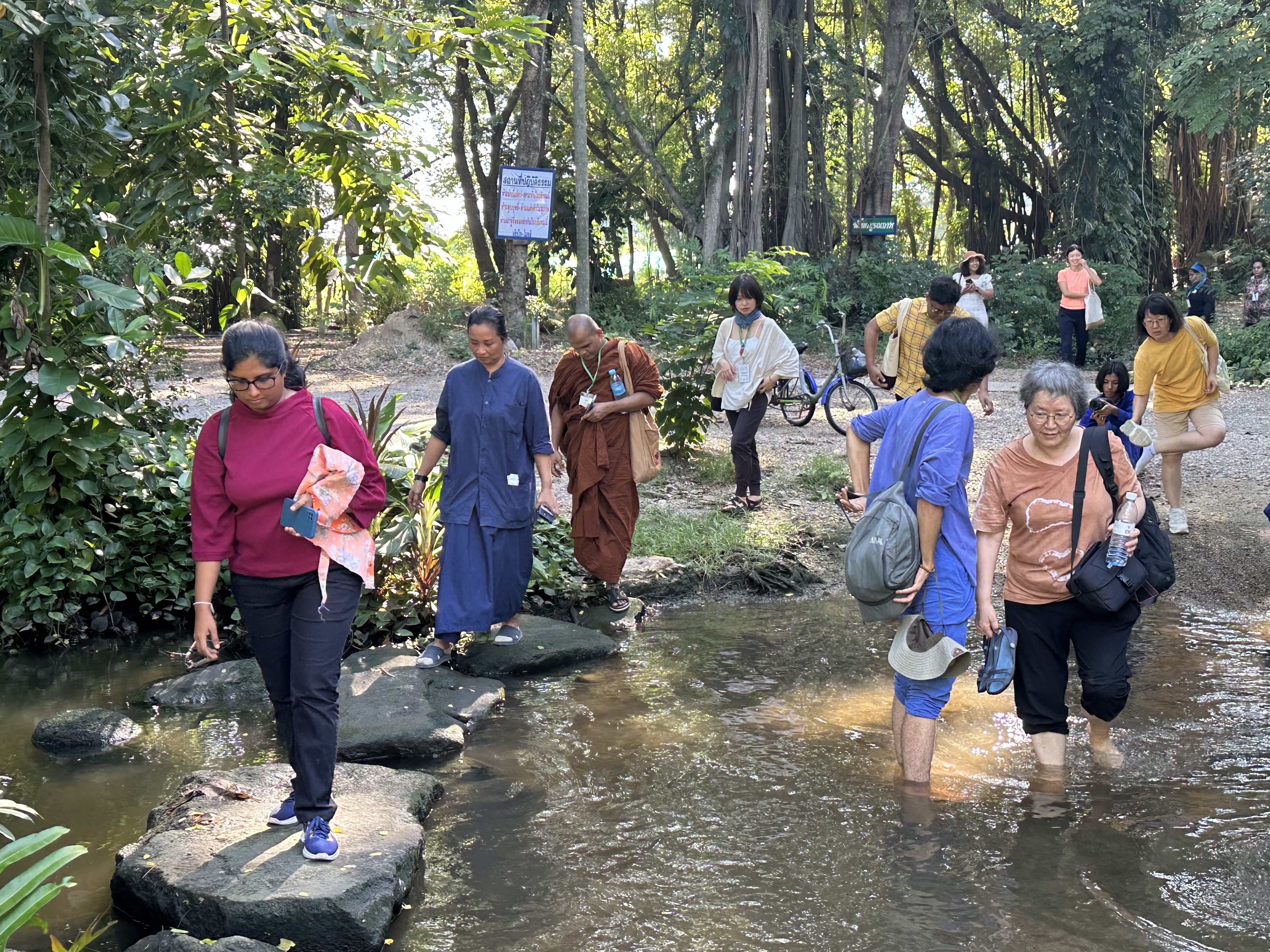
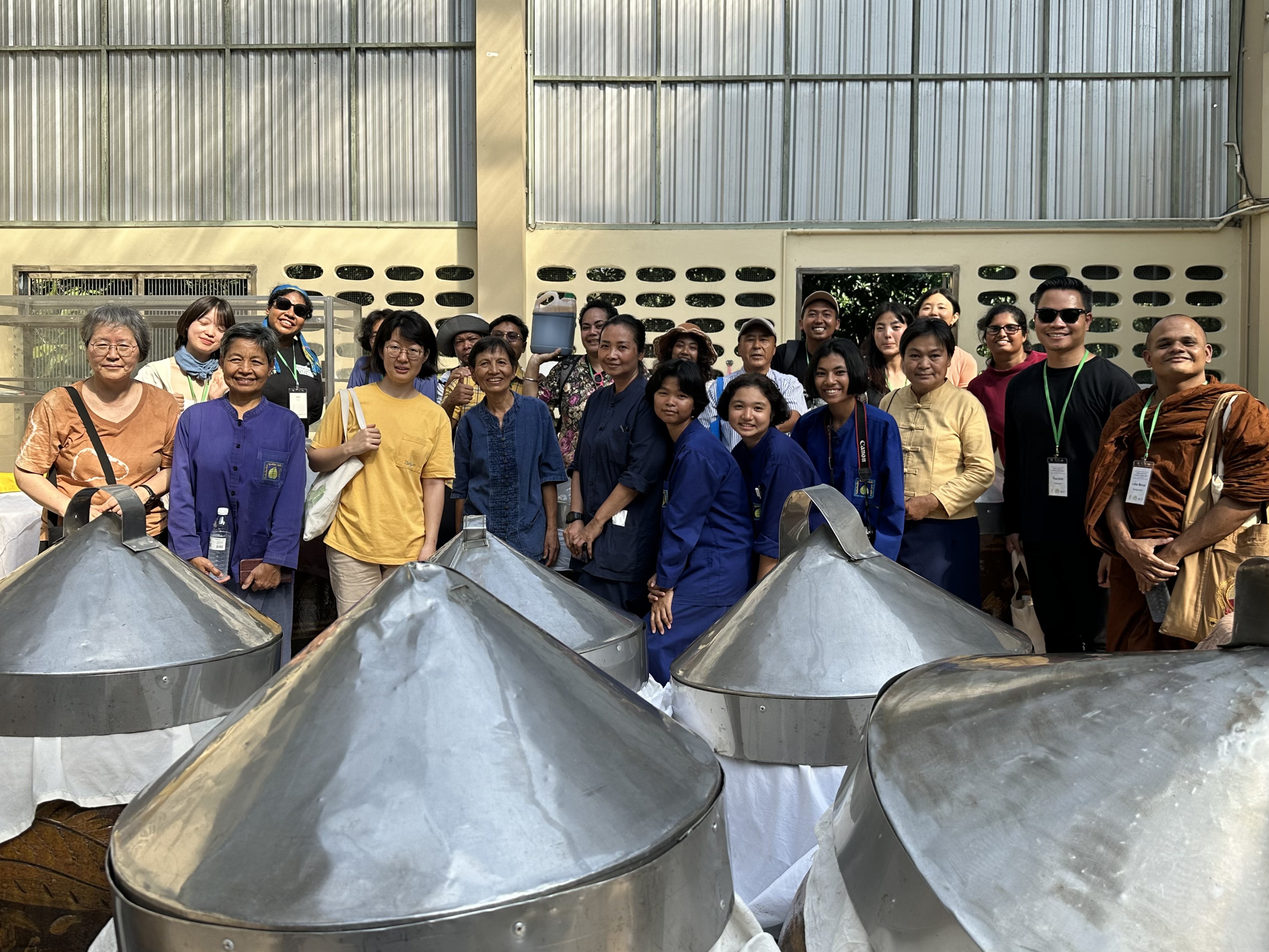
2. Asoke Community: Established in the 1970s, the Buddhist Asoke group pioneered in practicing self-sufficiency at the village community level. They have established centers across Thailand, such as Santi Asoke, Pathom Asoke, Ratchatani Asoke, and Srisa Asoke. These communities primarily engage in organic agriculture, cultivating rice and vegetables in fields and gardens they own or rent. Additionally, they produce various products, including tofu, mushrooms, herbal shampoos, detergents, and herbal medicine, sold at cooperative shops. The income generated supports community investments in education, healthcare, and other amenities, embodying the concept of “Booniyom” or in favor of merit. The Asoke group also publishes monthly magazines discussing Buddhist and general topics, further contributing to community engagement and discourse.


 Towards Organic Asia