
15-16 October 2023
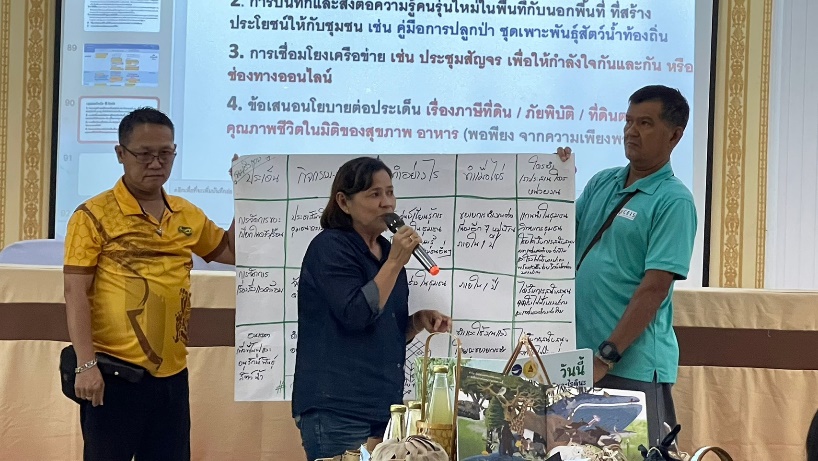
The Chumchonthai Foundation, in collaboration with provincial partners, organized a meeting and exchange on the impacts of coastal erosion and climate change on food security, focusing on Lessons Learned from the Upper Gulf of Thailand (Ao Kor Kai). This event occurred from October 15th to 16th, 2023, in Samut Sakhorn Province.
Ao Kor Kai, situated within the Thailand Gulf, has historically been abundant in food and biodiversity. However, coastal erosion has become a significant challenge for local communities over the past two decades. The Chumchonthai Foundation and community partners have worked in this area for over 17 years, leading to valuable insights gathered during the meeting and exchange.
The key conclusions and recommendations from the gathering are as follows:
- Conservation Activities: Suggestions include initiatives such as waste collection, reforestation, restoration of local aquatic species during appropriate seasons, and household grease trapping.
- Knowledge Transfer: Recording and disseminating knowledge to the younger generation, both within and outside the community, is essential. This includes creating manuals for forest planting and local aquatic animal breeding specific to the Ao Kor Kai area.
- Networking: Establishing networks through physical meetings or online platforms is crucial to fostering stakeholders’ mutual support and knowledge sharing.
Policy Recommendations: Advocacy efforts should focus on policies related to land tax, disaster management, waterlogged lands, and quality-of-life dimensions, particularly health and food security.
Furthermore, Mr. Jangkrai Jakrajit, the Manager of the Thai Community Foundation, outlined preliminary driving processes, including:
- Land Rights: Addressing issues related to waterlogged lands and ownership rights, including withdrawing unused documents. This may require amending Article 61 of the land code and establishing committees to address land rights effectively.
- Land Tax: Proposing progressive land tax rates, with exemptions for agricultural lands, to incentivize resource conservation and environmental protection.
- Coastal Erosion as a Disaster: Recognizing coastal erosion as a disaster is crucial for effective response and mitigation efforts. This requires policy changes to ensure adequate compensation and budget allocation. As demonstrated in successful cases in Phang-nga Province, collaboration with authorities is necessary to advance this agenda.
In conclusion, Ao Kor Kai faces significant risks due to climate change, particularly affecting the food ecosystem and traditional food systems. Addressing these challenges requires collaborative efforts across various sectors and levels of governance to ensure sustainable and resilient communities in the face of environmental threats.


 Towards Organic Asia